
How Clean Drinking Water Transforms Rural Communities
Safe water improves health, frees time for women and girls, and strengthens education and livelihoods in rural India.
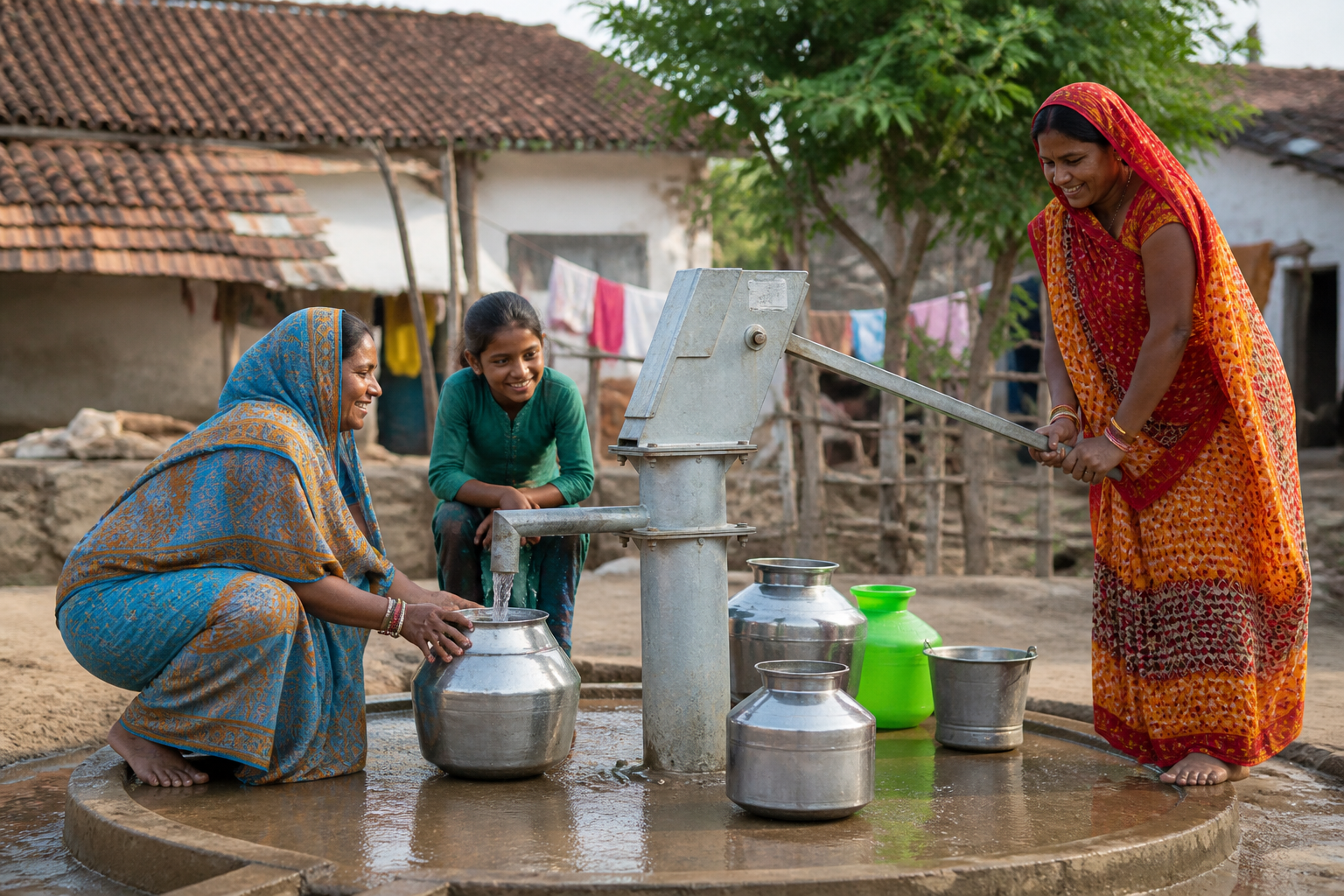
Clean drinking water is one of the most basic needs of life — and one of the most powerful drivers of community development. When water is unsafe or far away, every part of daily life becomes harder.
Contaminated water increases the risk of waterborne diseases, especially among children. Families then spend more on medical care, miss school and work days, and struggle to stay healthy enough to move forward.
Water collection also carries a hidden time cost. In many villages, women and girls walk long distances to fetch water. That time could otherwise go to education, paid work, rest, or family care.
When communities gain reliable access to safer water, the benefits multiply: fewer illnesses, better school attendance, more productive hours, and greater dignity in everyday living.
Sustainable water solutions need more than infrastructure. Local ownership, basic maintenance training, and community awareness help ensure systems keep working long after installation day.
SAANJ’s rural development efforts recognize clean water as essential infrastructure for health and opportunity — not a standalone project, but a foundation for progress.
A village with safe water is better prepared to learn, earn, and thrive. Clean water does not only quench thirst — it unlocks potential.
Help write the next story
Support a program or join as a volunteer.